A buyer-focused guide to inventory intelligence, digital twins, and pallet-level verification in forklift-led 3PL operations
Warehouse visibility is no longer a back-office improvement project. For 3PL operators, it is becoming part of the service promise. Customers expect accurate stock data, fast answers, fewer shipment mistakes, and clear proof when something goes wrong. That is why platforms like Gather AI and Dexory are getting attention from logistics leaders, and why Zimark belongs in the same category conversation.
The buying question is not simply which platform has the most advanced technology. The better question is which platform solves the specific trust gap inside your operation.
For a pallet-driven 3PL warehouse, that distinction matters. These sites usually already have a WMS. They already scan. They already count. They already have SOPs. The problem is that inventory and shipment confidence still depends on people making every scan, update, handoff, relocation, and loading decision correctly.
When that confidence breaks, the cost appears quickly: recounts, pallet searches, delayed loads, manual quality checks, customer disputes, OS&D claims, detention pressure, service credits, and managers spending hours reconstructing what should have been clear in the first place.
Bottom line: Gather AI is strongest when the buyer wants flexible physical AI across drones, MHE cameras, and inventory intelligence. Dexory is strongest when the buyer wants autonomous robot-led scanning and a live warehouse digital twin. Zimark is strongest when a pallet-driven 3PL wants real-time pallet verification, stronger WMS trust, and searchable proof of what moved and what shipped.
The real comparison is not technology vs technology
A surface-level comparison can make Gather AI, Dexory, and Zimark sound like three versions of the same warehouse visibility product. They are not.
| Gather AI | Dexory | Zimark |
| Physical AI platform for warehouse reality capture. | Robotics-led warehouse intelligence platform. | Visual verification layer for pallet-led operations. |
| Strong for drone-based inventory intelligence, MHE Vision, AI image analysis, WMS or ERP comparison, case counts, occupancy intelligence, cold storage workflows, and broader dock-to-dock visibility. | Strong for autonomous robots that scan warehouse locations and feed DexoryView, a live digital twin and analytics layer for stock accuracy, racking, space, movement, and operational intelligence. | Strong for camera-based verification around pallet movement, location changes, staging, and loading. Designed to strengthen the WMS without becoming a WMS, CCTV archive, drone program, or robot fleet. |
The key distinction is fit. Gather AI and Dexory are strong platforms for seeing more of the warehouse. Zimark is built for pallet-led operations that need to trust, and prove, where every pallet is at any moment. The theory behind it is simple: verify every movement, and you always know every location. And it happens inside the workflows the warehouse already runs.
Why pallet-driven 3PLs need a different evaluation lens
Pallet-driven warehouses can look deceptively simple. Compared with each-pick or case-pick operations, there are fewer units to identify, fewer small touches, and a cleaner physical flow. But these environments have their own accuracy risks: high pallet velocity, tall racking, frequent relocations, staging pressure, inbound surges, dock congestion, customer-specific rules, and labor turnover.
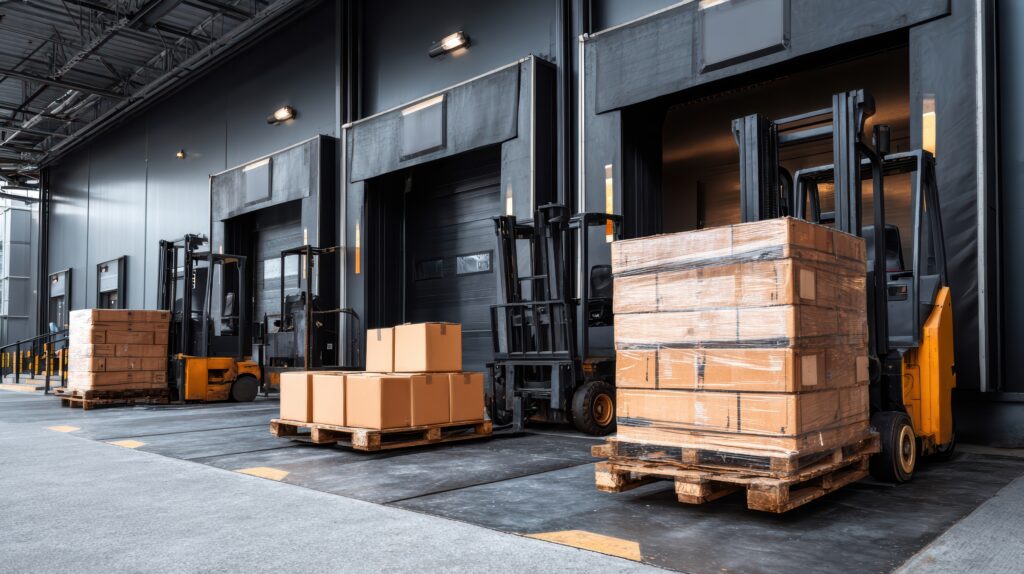
The WMS remains the system of record, but it can only be as accurate as the physical events recorded into it. If a pallet is moved under time pressure, placed in the wrong bay, staged in the wrong lane, pulled but not updated, or loaded without defensible proof, the WMS may still look clean while the operation loses trust in it.
That is the inventory trust gap. It is not just an inventory problem. For a 3PL, it is a service problem, a labor problem, a margin problem, and a customer confidence problem.
A 3PL should evaluate warehouse visibility platforms against four operational questions:
- Does the system verify physical movement close to the moment it happens?
- Does it strengthen the WMS without forcing the operation to redesign core workflows?
- Does it reduce manual checks, recounts, searches, and supervisor investigation time?
- Does it create evidence that is searchable, tied to the pallet or shipment, and useful when a customer challenges the record?
Those questions change the comparison. A broad warehouse intelligence platform may be impressive, but the best choice is the one that reduces the most expensive uncertainty in the buyer’s actual operations.
Side-by-side comparison
| Criteria | Gather AI | Dexory | Zimark |
| Core model | Physical AI using drone-based inventory capture, MHE Vision, and computer vision workflows. | Autonomous warehouse robots plus DexoryView, a live digital twin and analytics platform. | Visual pallet verification using cameras across movement and shipping workflows. |
| Best fit | Flexible inventory automation, drone-enabled cycle counts, cold-chain scanning, lost-pallet search, and MHE-based workflow intelligence. | Daily or frequent full-site scans, warehouse digital twin visibility, space optimization, stock integrity, rack and safety analytics. | 3PLs that need stronger WMS trust, movement verification, loading accuracy, an coverage of outbound operations |
| Primary operational question | What is in each location, what looks wrong, and what exceptions should the team review? | What does the warehouse look like now, and how does that compare with system records and operating goals? | Did the right pallet move to the right place, get staged correctly, and ship with defensible proof? |
| Capture timing | Inventory capture through drones and MHE-mounted vision, depending on the use case. | Autonomous robot scanning across the warehouse, often positioned around daily or frequent site scans. | Live verification at pallet movement and shipping control points inside forklift-led workflows. |
| Strength for 3PLs | Flexible visibility without traditional infrastructure-heavy automation, with strong inventory and exception use cases. | Powerful site-level visibility and digital twin analytics for complex warehouse environments. | Directly supports the commercial promise of a 3PL: accurate inventory, fewer manual checks, fewer shipment disputes, and faster proof. |
| Potential mismatch | May be broader than needed if the buyer mainly wants pallet movement proof and outbound control. Drone programs also carry operational questions: flight safety around staff, recharging and duty cycles, and whether coverage suits larger facilities. | May be more system than needed if the site does not need a robot-led digital twin or frequent whole-site scans. Smaller facilities may not see the benefit at the entry price, and deep-lane storage limits what a passing robot can see. | Best suited to pallet-led operations where pallet identity, forklift movement, WMS trust, and shipment proof are central. |
How Gather AI fits the category
Gather AI built its reputation around warehouse inventory drones, but it should not be dismissed as a drone-only solution. Its current public positioning is broader: physical AI for intralogistics, inventory intelligence, MHE Vision, AI-driven insights, case counting, occupancy visibility, cold storage support, and integration with existing warehouse systems.
That breadth is Gather AI’s advantage. If a warehouse wants flexible computer vision that can collect inventory data through drones and, increasingly, through material handling equipment, Gather AI is a serious option. It is especially relevant where manual cycle counting consumes labor, rack locations are difficult to inspect, cold storage makes human exposure expensive, or teams need better exception data without a major infrastructure overhaul.
Gather AI’s MHE Vision offering is particularly important in this comparison. It moves the company closer to workflow-based visibility by using cameras on forklifts and other MHE to track pallet movements, digitize workflows, and improve shipping accuracy. A fair comparison should not reduce Gather AI to drones vs forklifts. The stronger distinction is that Gather AI is building a broader physical AI layer across multiple capture methods.
For many buyers, that breadth will be attractive. It gives them flexibility, multiple data-capture modes, and a broader path toward warehouse intelligence. The fit question is whether the buyer needs a flexible visibility platform, or a more focused verification layer around pallet movement and shipment proof.
How Dexory fits the category
Dexory approaches warehouse visibility through autonomous robots and a live digital twin. Its public materials position DexoryView as a central intelligence layer that connects physical warehouse reality to system data, helping teams monitor stock, racking, space, movement, discrepancies, and optimization opportunities.
This is a compelling model for larger facilities and enterprise operators that want frequent warehouse scanning without relying on manual audit teams. Dexory’s autonomous robots are designed to move through the site, scan pallet locations, validate stock against system records, and feed an analytics layer that helps teams identify errors, space inefficiencies, rack issues, damage risks, and other operational blind spots.
Dexory’s strongest story is whole-site intelligence. If the goal is to create a warehouse digital twin, improve stock accuracy at scale, optimize space, reduce manual audits, and give leadership a richer view of warehouse reality, Dexory deserves a serious look.
The pains Dexory addresses are the same pains every 3PL feels: inaccurate stock, wasted space, slow investigations. So the question for a 3PL is not whether those problems matter. It is timing. A scheduled robot scan tells you what was true when the robot passed. If the operational pain is concentrated around pallet movement, staging, loading, and customer proof, the buyer has to decide: can we wait to find out after the fact, or do we need live, real-time evidence at the moment the work happens?
How Zimark fits differently
Zimark’s strongest position is not that it is broader than Gather AI or Dexory. It is that it is more focused on the operating reality of pallet-led 3PL warehouses.
In many pallet-driven operations, the warehouse does not need to be convinced that its WMS matters. The WMS is already central. The issue is that the WMS does not independently verify physical reality. It records what people scan, enter, confirm, or correct. If the physical workflow drifts from the digital record, the WMS becomes less trusted even if the system itself is working exactly as designed.
Zimark closes that gap by giving the WMS eyes. Cameras watch the points where pallets actually move: receiving and labeling, putaway, pulling, relocation, staging, and loading. At each point, the system confirms the simple things that matter: right pallet, right place, right truck.
That makes Zimark especially relevant for 3PLs because their accuracy problem is rarely just internal. It is customer-facing. A missing pallet can delay a shipment. A wrong pallet can trigger a return or claim. A short ship can create a service issue. A weak evidence trail can turn a simple question into hours of CCTV searching, paperwork matching, and customer negotiation.
Zimark’s answer is workflow-native verification: use cameras and markers to verify pallet movement, support the WMS record, flag mismatches, give managers visibility, and create a searchable proof trail when a shipment or inventory question needs to be defended.
The Zimark argument comes down to freshness and accuracy. If you rely on the last count, your information is out of date. If you rely on manual scans, it is only as accurate as the busiest person on the floor. Zimark knows exactly what is happening in the warehouse in real time, and can prove it in minutes instead of hours. Put differently, the outcomes Gather AI and Dexory promise from inventory scanning (accurate locations, fewer counts, found pallets) are outcomes Zimark delivers continuously, in real time as each pallet moves, and without adding a drone program or robot fleet.
The most important distinction: finding errors later vs stopping them live
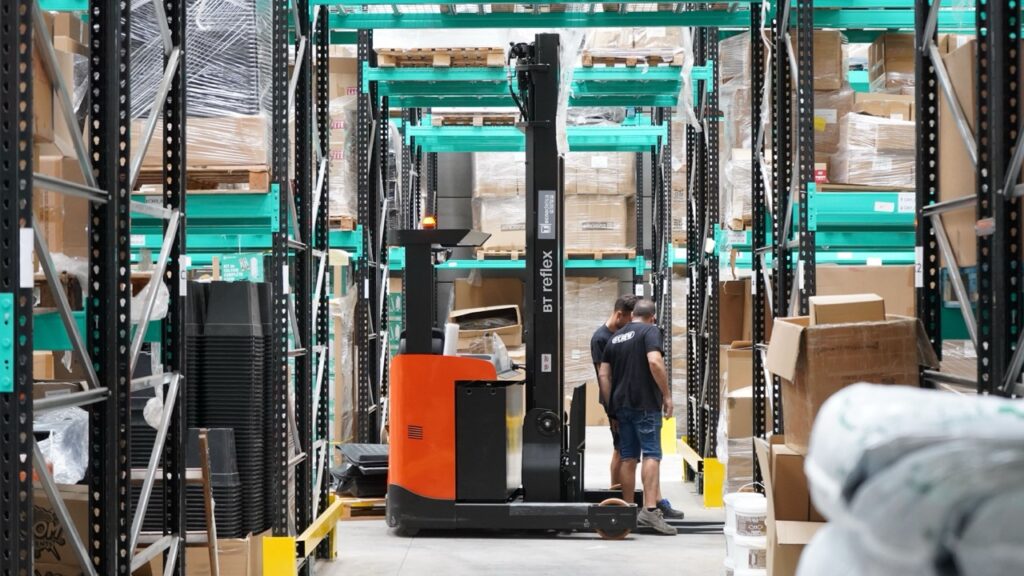
Preventing an error, catching it at the control point, or proving what happened on the spot is worth far more than finding a discrepancy later. For a 3PL, the highest-cost failures happen at specific workflow moments: a pallet is put away, relocated, pulled, staged, loaded, or released. Those are the moments where verification either exists or it does not.
That is the real distinction in this category. Drones and autonomous robots are built for discovery: they take a fresh snapshot of the warehouse, reduce the burden of manual cycle counts, inspect hard-to-reach locations, and help teams reconcile system data against physical reality.
Those outcomes matter. But they are not exclusive to drones and robots. Because Zimark verifies every movement as it happens, it produces the same results (accurate locations, no cycle-count fire drills, fewer reconciliations, found pallets) continuously, as a byproduct of verification rather than a scheduled event.
Discovery asks: what do we see now? Verification asks: Did the correct physical event happen at the moment the operation needed certainty?
Zimark is not trying to out-drone Gather AI or out-robot Dexory. It is focused on the control points where pallet operations need trust, live.
The 3PL buyer’s framework: choose by job to be done
Choose Gather AI when the job is drone-based inventory intelligence
Gather AI is likely the better fit when the buyer specifically wants drone-led capture and platform breadth: aerial cycle counts in tall racking, case counting, and a flexible physical AI platform that spans drones and MHE. Note that outcomes like fewer manual counts and found pallets are not unique to any one capture method; Zimark reaches them through continuous movement verification. The Gather AI difference is the drone capture model and the breadth of the platform.
Best-fit buyer scenario: A warehouse has significant counting labor, frequent inventory exceptions, or hard-to-reach rack locations, and wants a flexible AI platform that can capture more warehouse reality with less manual walking and scanning.
Choose Dexory when the job is sitewide robotic intelligence
Dexory is likely the better fit when the buyer wants autonomous robots to scan the site regularly, create a live digital twin, identify discrepancies, improve space utilization, monitor racking and hygiene issues, and give leadership a high-level operational intelligence layer.
Best-fit buyer scenario: A large facility wants frequent full-site scanning, digital twin analytics, visibility across space and stock, and a managed robotics model that can reduce manual audits and improve enterprise-level warehouse intelligence.
Choose Zimark when the job is pallet-level trust and proof
Zimark is likely the better fit when the buyer wants to strengthen pallet workflows without adding a separate drone program or robot fleet. It is designed for sites where forklifts are already the center of pallet movement, the WMS is already the system of record, and the practical pain is confidence: confidence in location, confidence in staging, confidence in loading, and confidence in the evidence trail.
Best-fit buyer scenario: A pallet-driven 3PL needs fewer manual checks, fewer cycle-count fire drills, better manager visibility, stronger WMS trust, fewer outbound errors, and fast proof for customer-facing questions about what moved, where it went, and what shipped.
Where Zimark creates the strongest business case
The strongest Zimark business case sits at the intersection of inventory accuracy and outbound control. That intersection is where 3PL service quality becomes visible to customers.
A pallet location issue may begin inside the warehouse, but it becomes commercially painful when it delays a customer shipment, forces a re-pick, blocks a dock door, triggers a customer escalation, or creates a disputed load. Likewise, a loading mistake may look like a dock problem, but the root cause often starts earlier in the pallet journey: location drift, staging confusion, incomplete status updates, or weak identity verification.
That is why Zimark should not be described only as an inventory accuracy tool or only as a proof-of-load tool. Its stronger story is continuity across the pallet journey.
For a 3PL, the value is in turning a sequence of fragile manual assumptions into a more defensible chain of events:
- This pallet was received and identified.
- This pallet was placed in the right location.
- This pallet was pulled or relocated.
- This pallet was staged for the right shipment.
- This pallet was loaded onto the right truck.
- This proof can be retrieved by shipment, WMS ID, date, door, trailer, or another operational reference.
That chain is valuable because it reduces the two things 3PL operators hate most: preventable errors and slow investigations.
A fair view of trade-offs
A credible comparison should make room for fit boundaries, not just vendor strengths.
- Gather AI may be the better fit when the buyer wants broad, flexible inventory intelligence across drones, MHE, cold storage, and exception workflows. It should not be dismissed as a drone-only solution.
- Dexory may be the better fit when the buyer wants frequent whole-site scanning, a live digital twin, space analytics, and a managed robot-led warehouse intelligence model.
- Zimark may be the better fit when the buyer operates a pallet-led 3PL environment and needs movement verification, WMS trust, loading accuracy, and searchable proof inside existing forklift workflows.
Zimark is not the universal answer for every warehouse visibility problem. Its strongest fit is where pallet identity, forklift movement, shipment accuracy, and defensible proof are central to the operation.
A practical buying checklist for warehouse visibility platforms
Before choosing any warehouse visibility platform, 3PLs should ask:
- What is our highest-cost visibility problem: counting, sitewide visibility, pallet movement, or outbound proof?
- Do we need better snapshots of inventory, or stronger verification of movement as work happens?
- How much new operational burden will the system create for supervisors, operators, IT, and inventory control?
- Will the system reduce manual verification, or simply generate more exceptions for managers to resolve?
- Can evidence be retrieved quickly by the identifiers our team and customers actually use?
- Does the system support customer-facing proof, or mainly internal analytics?
- Will the platform strengthen the WMS, or create another place where teams need to reconcile data?
- Can the solution scale across sites without changing the warehouse’s core operating model?
- What proof can the vendor provide for accuracy, exception handling, time-to-value, and implementation effort?
- Which workflow will improve first: cycle counting, location accuracy, putaway, picking, staging, loading, claims resolution, or customer reporting?
This checklist keeps the discussion grounded. Otherwise, buyers risk comparing impressive technologies without first agreeing on the operational job.
Final recommendation
Gather AI and Dexory are both serious warehouse visibility platforms. They have credible technology, clear category momentum, and a legitimate place on an enterprise buyer’s shortlist.
But 3PLs should not evaluate them as generic warehouse software. They should evaluate them against the trust gaps that cost the most money and management time.
- Choose Gather AI if the primary goal is flexible physical AI for inventory intelligence, drone-enabled scans, MHE-based visibility, case counting, and exception workflows.
- Choose Dexory if the primary goal is autonomous robot-led scanning, a live digital twin, full-site visibility, space optimization, stock integrity analytics, and enterprise warehouse intelligence.
- Choose Zimark if the primary goal is to make a pallet-driven, forklift-led 3PL operation more trustworthy and defensible: stronger WMS confidence, fewer manual checks, better pallet movement verification, cleaner outbound control, and searchable proof when customers ask what happened.
The point is not that Zimark is bigger than Gather AI or Dexory. The point is that Zimark may be the better fit when the buyer’s real problem is not visibility in the abstract, but trust at the pallet level.
For 3PLs, the winning system is the one that helps the warehouse answer the questions that matter under pressure:
- Where is the pallet?
- Did it move correctly?
- Did it ship correctly?
- Can we prove it quickly?
That is where Zimark belongs in the Gather AI vs Dexory conversation.
FAQ
Is Gather AI only a drone inventory company?
No. Gather AI built its reputation with warehouse inventory drones, but its current positioning is broader. MHE Vision expands the platform into material handling equipment workflows, including pallet movement tracking, workflow digitization, and AI-powered insights.
How is Dexory different from Gather AI?
Dexory is more robotics-led. It uses autonomous warehouse robots and DexoryView to create a live warehouse digital twin and analytics layer. Gather AI is more flexible across drones, computer vision, inventory intelligence, and MHE-based capture.
How is Zimark different from Gather AI and Dexory?
Zimark eliminates the need for retroactive inventory counting by verifying every pallet’s location whenever it is moved, in real time. Gather AI and Dexory automate the retroactive counting process with drones and robots; Zimark makes the count unnecessary. For 3PLs, that translates into stronger WMS trust, less manual checking, better loading accuracy, and searchable proof around inventory and shipment events.
Does Zimark replace the WMS?
No. Zimark should be understood as a layer that strengthens the WMS. The WMS remains the system of record. Zimark helps make that record more trustworthy by connecting pallet identity, physical movement, visual verification, and workflow evidence.
Which platform is best for proof of load?
For proof-of-load and outbound dispute workflows, Zimark has the clearest fit; this is exactly what Shipping Control is built for. Its value is not just recording that something happened. It is making shipment evidence linked, searchable, and useful when the warehouse needs to defend a load quickly.
Which platform is best for a pallet-driven 3PL warehouse?
It depends on the job to be done. Gather AI is strong for flexible inventory intelligence. Dexory is strong for robot-led digital twin visibility. Zimark is strong for 3PLs that need forklift-native pallet verification, WMS trust, loading accuracy, and real-time proof.