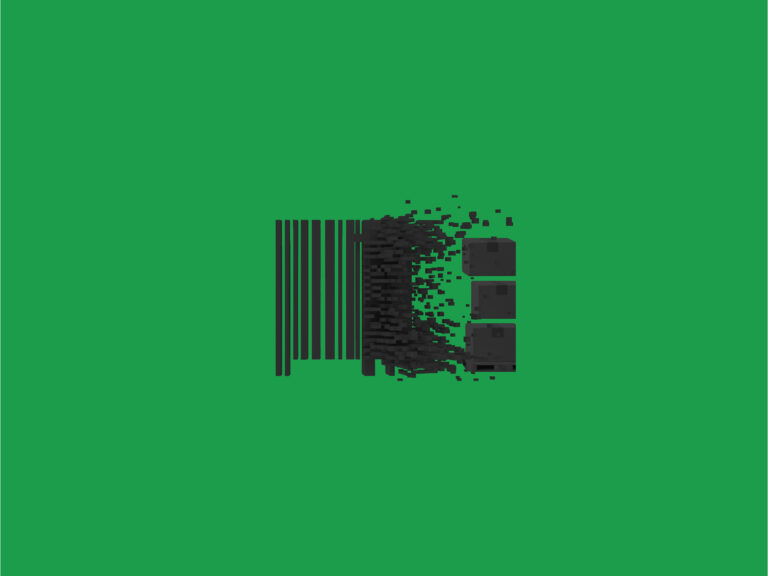
Barcodes changed logistics forever. When they entered warehouses in the 1980s, they brought structure to chaos. Inventory could be identified. Movements could be recorded. Processes that once relied on paper became digital. At the time, barcode scanning was a breakthrough.
But it was designed for a different operational reality.
Warehouses today move volumes that early barcode systems were never meant to support. Throughput is higher. SLAs are tighter. Dock doors turn faster. 3PLs juggle multiple clients, overlapping shipments, and constant reprioritization. In that environment, every additional checkpoint matters.
And that’s exactly what scanning is a checkpoint. Each barcode scan requires an interruption. Someone must stop, aim, confirm, and move on. Individually, those moments seem insignificant. At scale, they slow everything down. More importantly, they introduce a dependency that modern operations struggle to sustain.
Scanning requires confirmation. Vision delivers continuity.
When scans are missed, trust is what breaks first
In high velocity environments, missed scans are inevitable. A label is damaged. A pallet is wrapped. An operator is interrupted mid task. When that happens, the system doesn’t always know. The digital record drifts away from physical reality, and the gap only becomes visible later, often when a shipment is already on the road.
This is where the cost appears. One missed scan doesn’t just affect a data point. It affects trust in the system. Supervisors hesitate. Investigations follow. Customers question accuracy. The operation slows down to compensate for uncertainty.
How computer vision creates a record that updates itself
Computer vision closes that gap by removing the need for manual confirmation. Instead of asking operators to tell the system what happened, vision allows the system to observe what actually happens. Pallets are recognized visually as they move, even when labels are damaged, partially hidden, or temporarily unreadable. Movement is logged continuously, without requiring people to change how they work.
The result is a record that updates itself.
This shift is subtle but profound. Vision does not replace human effort. It replaces human reporting. Operators focus on moving freight. Systems focus on understanding it. The handoff between physical work and digital record becomes seamless.
Reliability at scale, and the move toward continuous sight
One of the most important insights we see in real deployments is that this continuity changes how operations behave. When data reflects reality in real time, teams stop compensating for the system’s blind spots. They trust what they see. Decisions are faster. Exceptions are clearer. The operation moves with less hesitation.
This is why the transition from barcode to vision is not primarily about technology. It’s about reliability.
Barcodes assume perfect execution. Vision assumes reality.
When systems no longer depend on human reliability for accuracy, people become a strength instead of a risk factor.
Human judgment, adaptability, and experience add value on top of a stable data foundation, rather than being responsible for holding it together. This is the foundation of smart pallet tracking.
By using computer vision to track pallet movement automatically, warehouses reduce their exposure to missed scans and incomplete records. They gain a continuous view of operations rather than a sequence of confirmations. The WMS reflects what is happening now, not what was last reported.
At Zimark, we see this shift most clearly in high throughput environments. When operations exceed a few hundred pallet movements per hour, the cost of manual confirmation rises sharply. Vision doesn’t replace scanning overnight, but it frees operations from depending on it for accuracy.
The recommendation is straightforward. If your warehouse is operating at scale, with fast dock turns and tight SLAs, it’s time to evolve how visibility is created. Not by adding more steps, but by removing the need for them.
The future of warehouse accuracy is not built on more checkpoints. It’s built on continuous sight.